
Hemlock Rivets Manufacturer
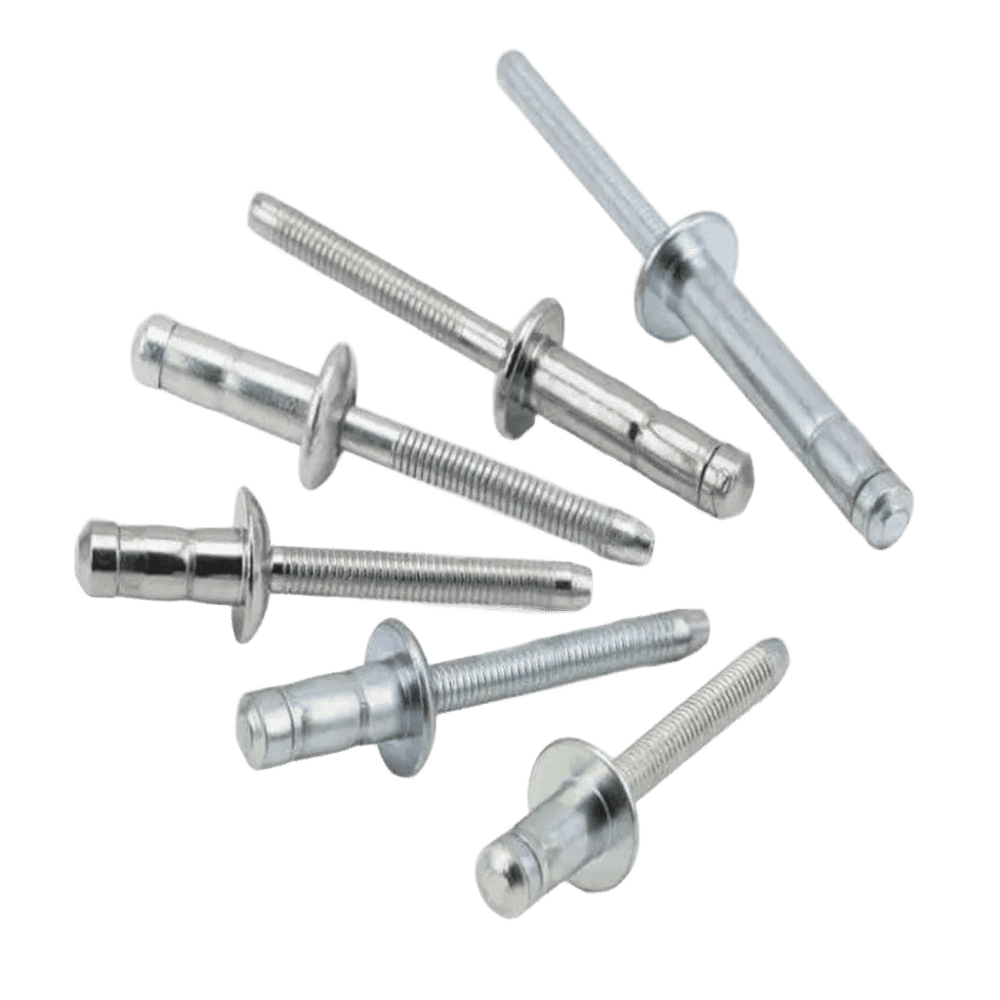
Rivmate offers Hemlock Rivets of consistent quality. Hemlock Rivets feature reliable locking performance and high shear strength.Hemlock Rivets provide high-strength fastening solutions for applications involving vibration, thin-gauge sheet metal, and heavy-duty assemblies.
- The mechanical lock core structure provides greater metal bonding strength
- Reduces the risk of rivet loosening in your products under vibrating conditions
- Better suited for thin sheets and high-strength assemblies, helping to distribute stress and reduce sheet deformation and hole tear-through
- IATF 16949 quality control ensures stable production
- Meets the needs of bulk purchasing and stable production
Why Choose Our Hemlock Rivets Manufacturer
- High shearing strength and tensile strength which can provide the solid and vibration resistant connection.
- Provide the large blind side bearing area to be close to rear plate.
- Provide the large blind side bearing area to be close to rear plate.
- The retained mandrel can avoid damage, electric leakage or marowak sound and other problems caused by falling off of the mandrel.
Rivmate —— Your Professional Customized Hemlock Rivets Manufacturer
Rivmate assists international customers in sourcing the right Hemlock rivets, serving distributors, OEM manufacturers, and project procurement clients. When you encounter issues such as insufficient strength, loosening, or sheet metal deformation during assembly with standard rivets, Hemlock rivets offer superior shear strength, tensile strength, and a more reliable core-to-sheet connection.
Rivmate can also provide customized solutions tailored to your needs. Production and inspection are conducted in strict accordance with IATF 16949 and ISO 9001 quality management standards. We can provide inspection reports, material certificates, and relevant test data based on your project requirements.
As your long-term hemlock rivet manufacturer, Rivmate does more than just supply products—we help you build a stable, traceable, and scalable riveting supply chain.
Choose Hemlock Rivets by Material
Hemlock Rivets made from different materials are suitable for various product assembly environments. You can choose the right one based on strength requirements, operating conditions, sheet metal material, and corrosion resistance needs. Rivmate can also recommend the appropriate Hemlock Rivet material for you.
Steel Hemlock Rivets
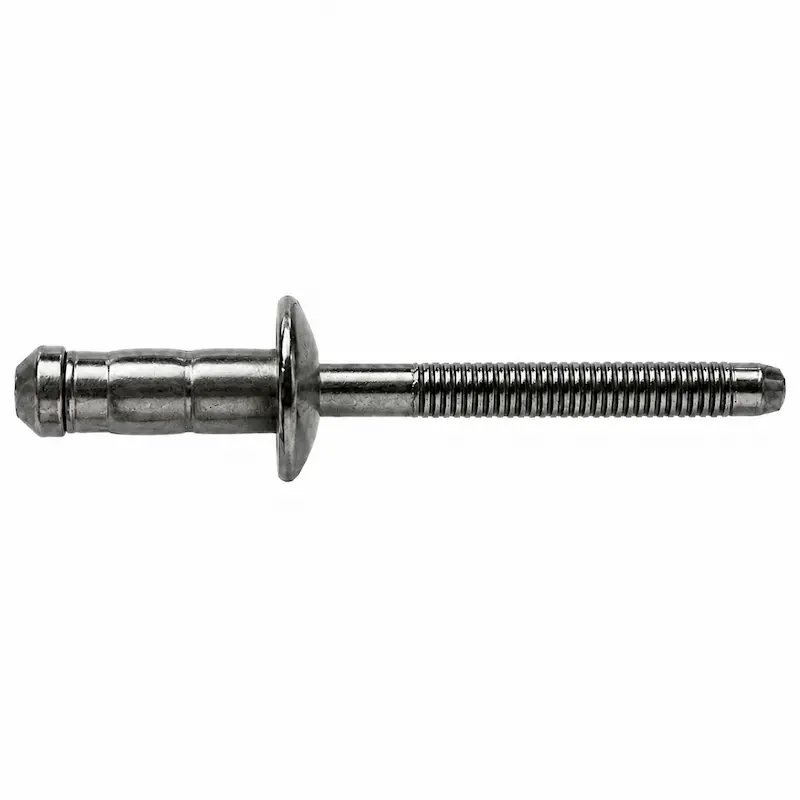
Carbon steel is inherently strong and has a high load-bearing capacity. It offers superior shear and tensile strength. Hemlock Rivets are ideal for heavy-duty sheet metal, metal frames, truck bodies, industrial equipment, and structural fasteners.
Stainless Steel Hemlock Rivets
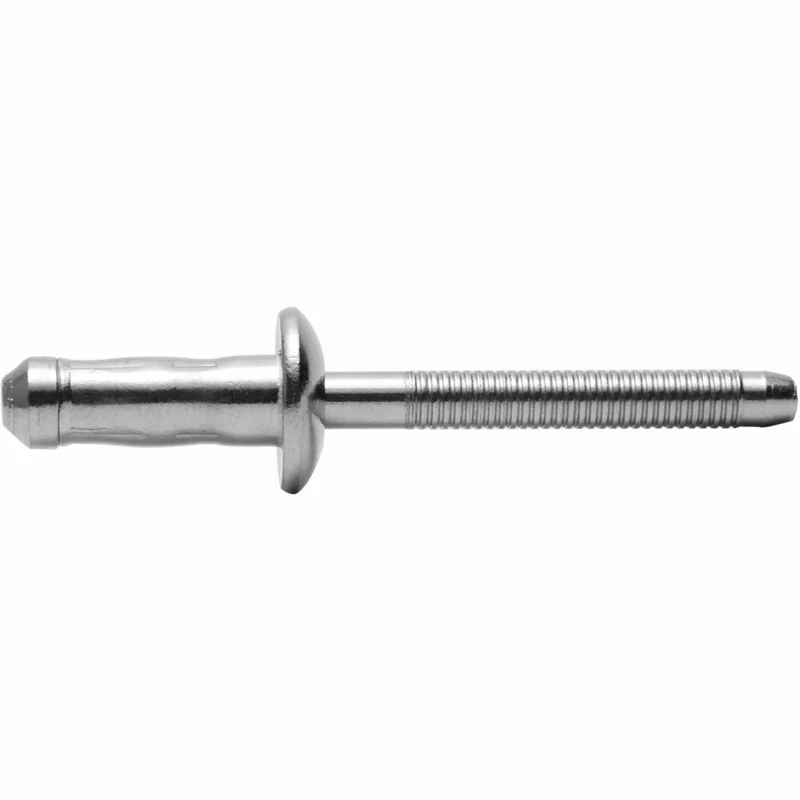
Stainless steel reduces the risk of rust, corrosion, and future maintenance. Hemlock Rivets are commonly used in HVAC equipment, outdoor enclosures, food processing equipment, marine equipment, and other high-humidity industrial environments.
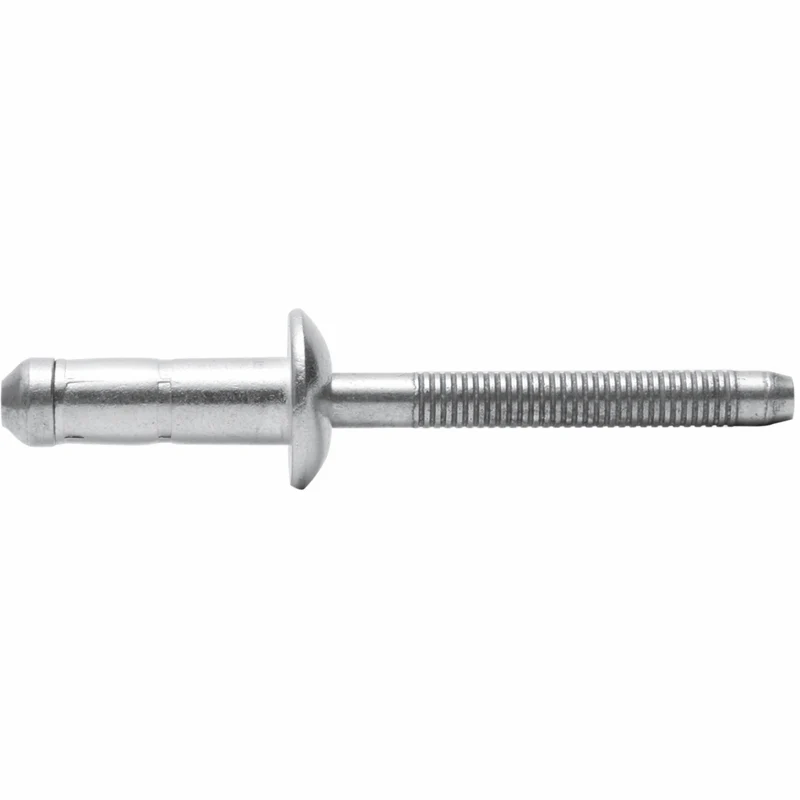
Aluminum Hemlock Rivets
Aluminum reduces the risk of electrochemical corrosion caused by contact between dissimilar metals. It helps keep products lightweight and maintains a clean, sleek appearance. Hemlock Rivets are suitable for applications such as aluminum sheets, lightweight sheet metal, and equipment enclosures.
Choose Hemlock Rivets by Size
Hemlock Rivets come in various lengths to accommodate different sheet thickness ranges. Selecting the correct riveting range ensures a more secure connection. This also helps minimize issues such as loosening, rework, and failed riveting. Rivmate can assist you in selecting the appropriate specifications based on your sheet thickness, hole diameter, and application.
4.8mm Hemlock Rivets
The hole diameter ranges from 4.9 to 5.1 mm, and Hemlock Rivets can be used for riveting in the range of 1.5 to 13.5 mm. This minimizes issues such as reduced panel strength and unstable connections caused by excessively large holes, while maintaining a compact product appearance.
6.4mm Hemlock Rivets
Hemlock Rivets have a hole diameter of 6.6–6.8 mm. They accommodate a wider range of sheet thicknesses, with a riveting range of 1.5–26.0 mm. This reduces the complexity of inventory management and inventory pressure caused by significant variations in sheet thickness.
7.8mm Hemlock Rivets
The hole diameter is 8.1–8.3 mm. Suitable for products with larger mounting holes. The riveting range is 4.0–16.0 mm. Hemlock Rivets provide better hole-filling performance. They reduce issues such as hole loosening and uneven stress distribution on the joint surface.
9.8mm Hemlock Rivets
The largest available hole diameter range is 10.0–10.4 mm, as standard sizes cannot provide sufficient joint strength. Hemlock Rivets are designed for a range of 4.0–22.0 mm. They are suitable for heavy machinery, large metal structures, and high-load-bearing applications.
Choose Hemlock Rivets by Head Type
Different Hemlock Rivet head types are suitable for different assembly locations. Choosing the right head type can reduce processing costs, assembly interference, and the risk of rework. As a professional manufacturer, we can help you select the correct Hemlock Rivet head type based on your needs.
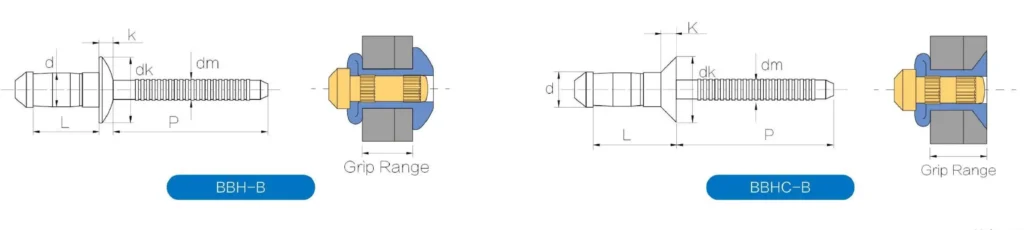
Dome Head Hemlock Rivets
The dome-head design provides a more stable contact surface. These are commonly used when your product does not require a flush surface or countersinking. Dome-head Hemlock rivets can reduce the number of processing steps and improve assembly efficiency for high-volume production.
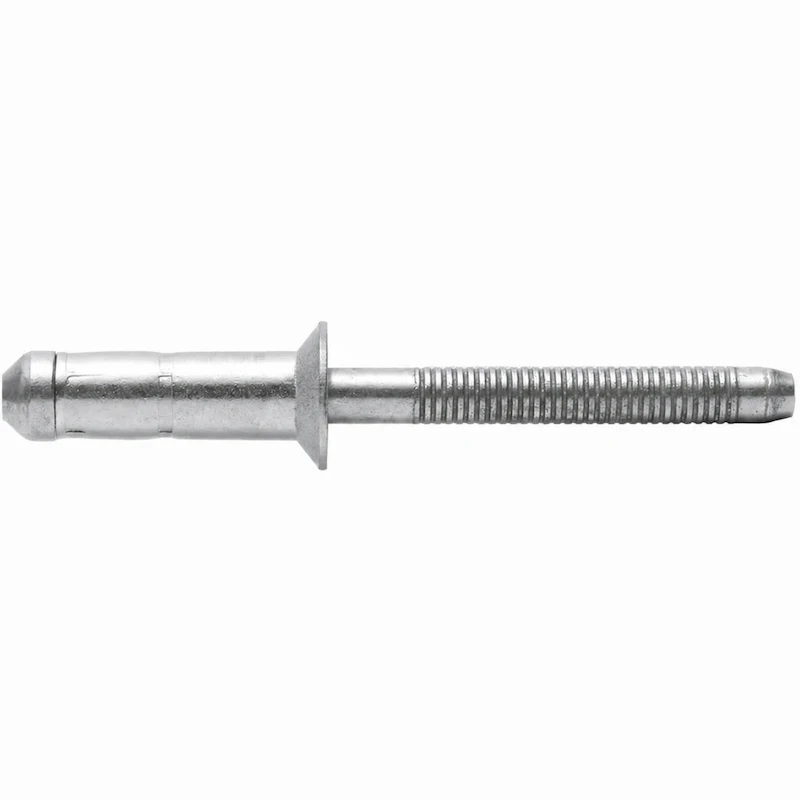
Countersunk Head Hemlock Rivets
The countersunk design allows the rivet head to sit closer to the surface of the sheet metal, reducing protrusions, scratches, and assembly interference. It is suitable for assembly on flat surfaces and projects with high requirements for visual consistency.
Rivmate Hemlock Rivets Specifications
| Material | Type | Head Style | Mandrel Material and Surface | Body Material and Surface | Rivet Diameter d (mm) | Head Diameter dk Max (mm) | Head Height k Max (mm) | Mandrel Diameter dm Max (mm) | Mandrel Reveal P Min (mm) | Hole Diameter (mm) | Grip Range Coverage (mm) | Tensile Ref (N) | Shear Ref (N) | Breaking Load Max (N) | Retention Load Min (N) |
|---|---|---|---|---|---|---|---|---|---|---|---|---|---|---|---|
| Carbon Steel | A Type | Dome Head | Carbon Steel SWCH45K / Zinc Plated | Carbon Steel 10B21 / Zinc Plated | 6.3-6.58 | 13.5 | 3.4 | 4.25 | 27 | 6.6-6.8 | 1.5-20.8 | 8800 | 10500-16000 | 15000 | 1800 |
| Carbon Steel | B Type | Dome Head | Carbon Steel SWCH45K / Zinc Plated | Carbon Steel 10B21 / Zinc Plated | 4.8 | 10.2 | 2.5 | 3.4 | 27 | 4.9-5.1 | 1.5-13.5 | 4400 | 6000-7800 | 9000 | 1000 |
| Carbon Steel | B Type | Dome Head | Carbon Steel SWCH45K / Zinc Plated | Carbon Steel 10B21 / Zinc Plated | 6.4 | 13.4 | 3.5 | 4.2 | 30 | 6.6-6.8 | 1.5-26.0 | 7920 | 7700-12500 | 15000 | 1800 |
| Carbon Steel | B Type | Dome Head | Carbon Steel SWCH45K / Zinc Plated | Carbon Steel 10B21 / Zinc Plated | 7.8 | 18 | 4.2 | 5.2 | 32 | 8.1-8.3 | 4.0-16.0 | 11500 | 15500-18000 | 23000 | 2500 |
| Carbon Steel | B Type | Dome Head | Carbon Steel SWCH45K / Zinc Plated | Carbon Steel 10B21 / Zinc Plated | 9.8 | 20 | 4.8 | 6.2 | 36 | 10.0-10.4 | 4.0-22.0 | 12740 | 21500 | 33000 | 3000 |
| Carbon Steel | B Type | Countersunk Head | Carbon Steel SWCH45K / Zinc Plated | Carbon Steel 10B21 / Zinc Plated | 4.8 | 9 | 2.3 | 3.4 | 27 | 4.9-5.1 | 3.5-13.5 | 3750 | 5400-6700 | 9000 | 1000 |
| Carbon Steel | B Type | Countersunk Head | Carbon Steel SWCH45K / Zinc Plated | Carbon Steel 10B21 / Zinc Plated | 6.4 | 10.2 | 2.5 | 4.2 | 30 | 6.6-6.8 | 3.0-17.0 | 7920 | 9450-12600 | 15000 | 1800 |
| Stainless Steel 304 | B Type | Dome Head | 304 Series Stainless Steel / Natural Polish | 304 Series Stainless Steel / Natural Polish | 4.8 | 10.2 | 2.5 | 3.4 | 28 | 4.9-5.1 | 1.5-13.5 | 4900 | 6000-6800 | 9500 | 800 |
| Stainless Steel 304 | B Type | Dome Head | 304 Series Stainless Steel / Natural Polish | 304 Series Stainless Steel / Natural Polish | 6.4 | 13.4 | 3.5 | 4.2 | 30 | 6.6-6.8 | 1.5-20.0 | 8300 | 14000-14500 | 16000 | 1200 |
| Stainless Steel 304 | B Type | Dome Head | 304 Series Stainless Steel / Natural Polish | 304 Series Stainless Steel / Natural Polish | 7.8 | 18 | 4.2 | 5.2 | 32 | 8.1-8.3 | 4.0-16.0 | 12500 | 20500 | 22000 | 1800 |
| Stainless Steel 304 | B Type | Countersunk Head | 304 Series Stainless Steel / Natural Polish | 304 Series Stainless Steel / Natural Polish | 6.4 | 10.2 | 2.5 | 4.2 | 30 | 6.6-6.8 | 4.5-11.5 | 8300 | 10700-13700 | 16000 | 1200 |
| Aluminum | B Type | Dome Head | Aluminum / Natural Polish | Aluminum / Natural Polish | 4.8 | 10.2 | 2.5 | 3.4 | 28 | 4.9-5.1 | 1.5-13.5 | 1600 | 1700-2500 | 5000 | 700 |
| Aluminum | B Type | Dome Head | Aluminum / Natural Polish | Aluminum / Natural Polish | 6.4 | 13.4 | 3.5 | 4.2 | 30 | 6.6-6.8 | 1.5-20.0 | 3400 | 4200-4900 | 7500 | 1200 |
| Aluminum | B Type | Dome Head | Aluminum / Natural Polish | Aluminum / Natural Polish | 7.8 | 18 | 4.2 | 5.2 | 31 | 8.1-8.3 | 4.0-16.0 | 5800 | 7800-9200 | 9500 | 1800 |
| Aluminum | B Type | Countersunk Head | Aluminum / Natural Polish | Aluminum / Natural Polish | 6.4 | 10.2 | 2.5 | 4.2 | 30 | 6.6-6.8 | 3.5-21.0 | 3400 | 4200-4900 | 7500 | 1200 |
Hemlock Rivets Manufacturing You Can Trust
Rivmate manufactures Hemlock Rivets in a variety of sizes to meet the structural fastening needs of your products. With a factory covering an area of 40,000 square meters, we have an annual production capacity of over 100 million Hemlock Rivets. We are committed to providing you with high-strength Hemlock Rivet solutions.
- A wide range of materials suitable for various industrial applications
- A variety of surface treatment options
- Custom manufacturing tailored to your needs
- IATF 16949 quality management system supporting traceable production control
From raw material inspection to cold heading, mandrel machining, surface treatment, automated assembly, riveting testing, and final packaging—every critical step is subject to strict quality control. We strictly adhere to the IATF 16949 quality management system to help you mitigate quality risks in bulk purchasing.
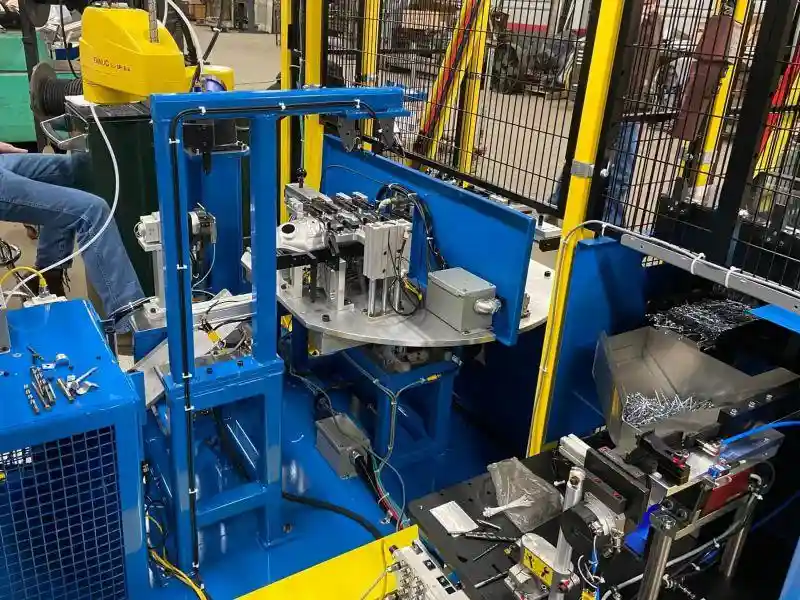
Pop Rivet Cold Heading Machines
Rivet Assembly machines
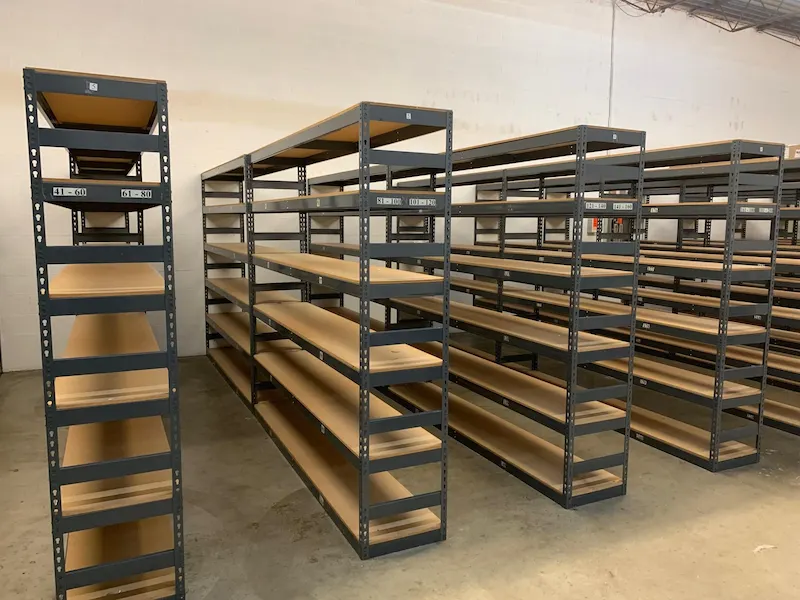
Our Rivet Warehouse
Stable Bulk Supply for Hemlock Rivets
Rivmate supports distributors, OEM customers, and industrial assembly customers in their long-term procurement of Hemlock Rivets, offering consistent specifications, materials, and design options for bulk orders. By comprehensively managing the entire manufacturing process of structural rivets—from material selection, mandrel forming, heat treatment, and surface coating to riveting validation and batch inspection—Rivmate fundamentally helps customers reduce quality fluctuations, delivery delays, and post-sales complaints.
- Ensure consistent quality across every batch of products
- Support customization of specifications, packaging, and brand labeling
- Provide PPAP Level 3 quality reports and testing
- Establish a stable, high-volume supply plan
By choosing Rivmate as your Hemlock Rivets manufacturer, you’ll not only secure a long-term supply of products, but also benefit from stable production capacity, quality control, packaging support, and the assurance of a long-term partnership.
Applications of Hemlock Rivets
Hemlock rivets are commonly used in applications requiring high strength, vibration resistance, and structural stability. Hemlock rivets address issues such as loosening, hole misalignment, unstable connections, and persistent rattling associated with standard rivets. As a professional manufacturer of Hemlock rivets, Rivmate can help you select the right Hemlock rivets for your needs.
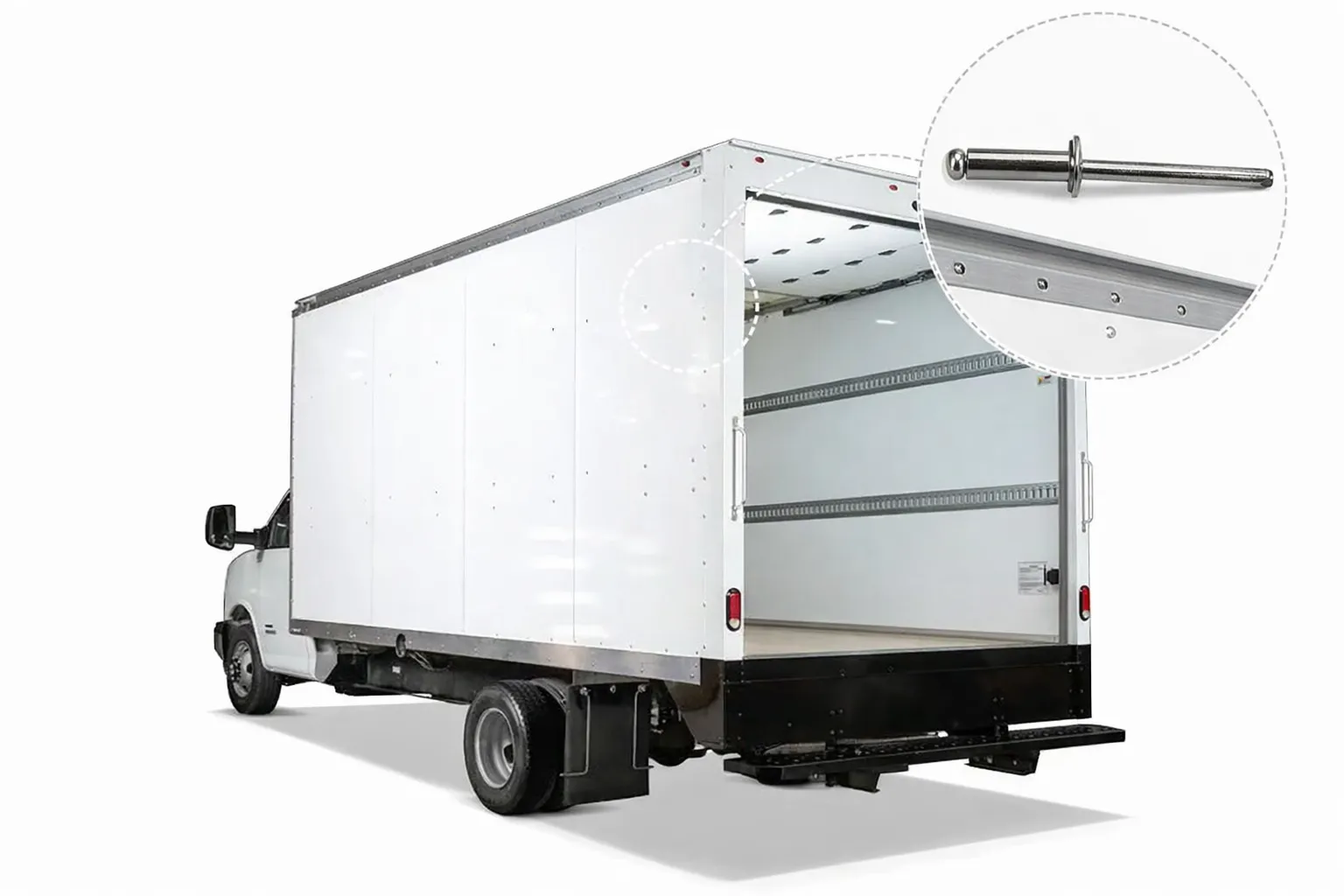
Truck Body & Trailer
Reduces loosening and rattling at connection points in vehicles exposed to prolonged vibration. Hemlock Rivets can be used to join body side panels, roof panels, door frames, and reinforcement members.

HVAC Ventilation Equipment & Air Handling Equipment
Solve problems such as unstable connections, low assembly efficiency, and loose panel fastening in vibrating environments. Hemlock Rivets are used for connections in air handling units, fan housings, equipment enclosures, and sheet metal structures.
Sheet metal enclosures & electrical cabinets
Reduces the heat-affected zone caused by welding, improving visual consistency and assembly efficiency. Hemlock Rivets are used for joining electrical cabinets, control cabinets, equipment enclosures, metal enclosures, and industrial sheet metal.

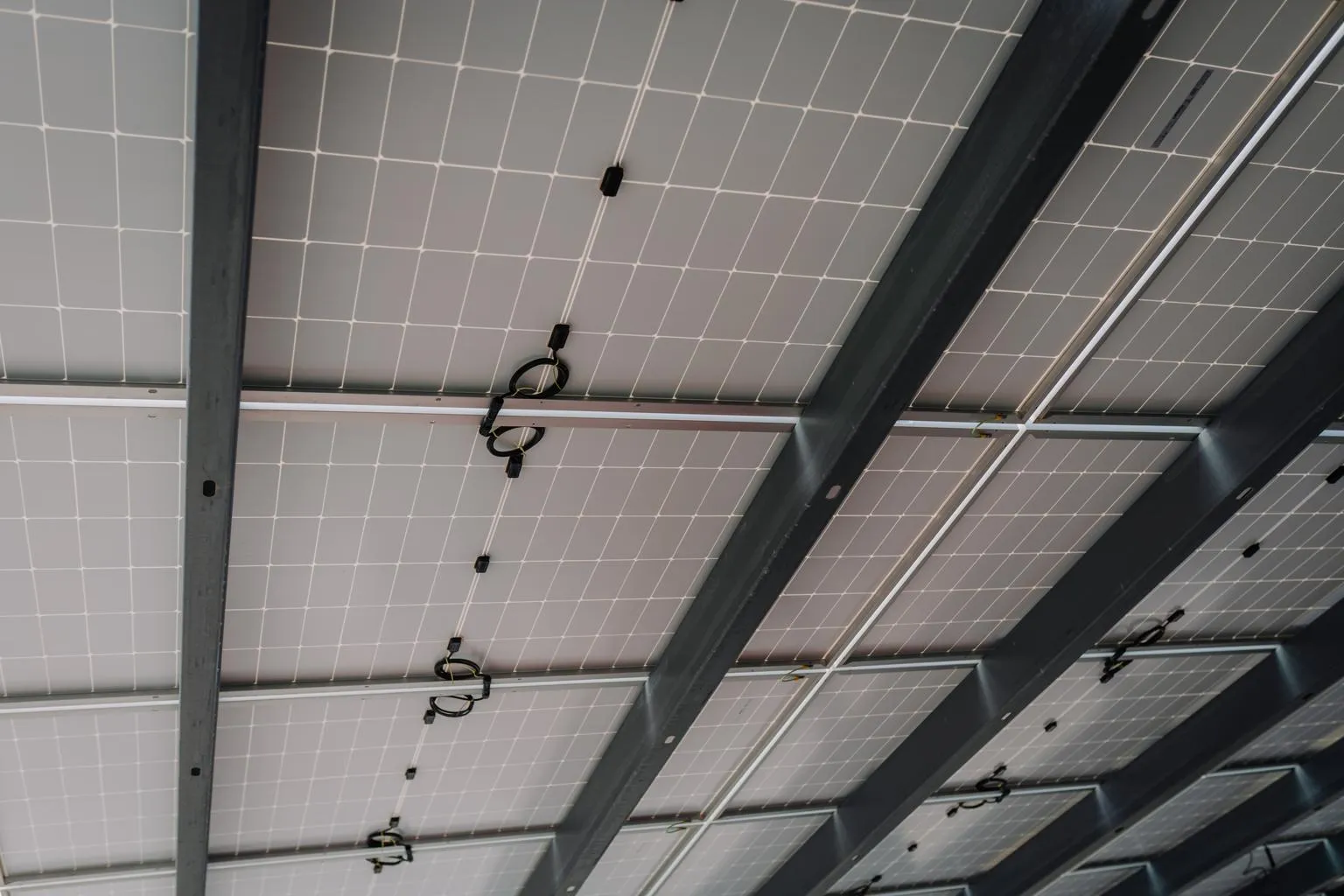
Solar Mounting & Outdoor Metal Frames
Improve on-site assembly efficiency while reducing the risk of loosening caused by outdoor vibrations, wind loads, and temperature fluctuations. Hemlock Rivets are used in assembly locations requiring high strength and vibration resistance, such as brackets, rails, and connectors.
Industrial Equipment
Reduce issues such as loosening of fasteners, core loss, abnormal noises, and post-sales maintenance after equipment operation. Hemlock Rivets are suitable for fastening applications in automated equipment, machinery, equipment frames, industrial enclosures, and protective covers.
Warehouse Racking & Ladders
Reduces the risk of deformation, loosening, and displacement at connection points after prolonged loading. Suitable for use at joints in shelving, support structures, industrial ladders, and lightweight structural frames.
Get An Instant Quote Now
1.Are there suppliers offering bulk Hemlok rivet purchases?
Yes. You can find suppliers online that support bulk purchases of Hemlock rivets, especially if you need them for distribution, OEM assembly, or engineering projects.
At Rivmate, you can purchase Hemlock rivets in bulk. We can select common specifications, materials, and surface finishes based on your requirements.
If your product requires bulk purchasing, simply provide the required dimensions, material, riveting range, hole size, surface finish requirements, and specific application scenario. Rivmate can then assist you in confirming the most suitable Hemlock rivet specifications. This helps minimize the risk of selection errors, inconsistent riveting results, and subsequent after-sales complaints before you proceed with bulk purchasing.
2.Can Hemlok rivets be used in marine applications?
Yes. However, you need to select the appropriate materials and surface treatments based on the specific marine environment in which your product will be used. It is important not to simply assume that all Hemlock rivets are suitable for marine applications.
If your application involves only humid environments, outdoor equipment, marine hulls, or marine equipment accessories, Hemlock rivets can be considered as a structural fastening solution. Hemlock rivets inherently offer good mandrel locking, vibration resistance, hole-filling capability, and sealing performance. RIVMATE previously supplied an Italian client who required Hemlock rivets installed on a ship to achieve a waterproof rating of IPX7.
3.How to order custom-sized Hemlok rivets?
If you wish to order custom-sized Hemlock rivets, you will need to provide complete application details so that we, as your supplier, can professionally assess whether the size, material, grip range, and installation results are suitable for your needs.
You will need to provide the dimensions, riveting range, hole diameter, material, surface finish, application scenario, and order quantity. If you have drawings or samples, you can send them directly to Rivmate for evaluation. Rivmate can help you confirm the appropriate specifications and structure before mass production, reducing the risk of selection errors and unstable riveting.
4.What industries commonly use Hemlok rivets?
If your product requires high-strength fastening, vibration resistance, anti-loosening properties, hole-filling capability, or a certain level of sealing performance, you may want to consider using Hemlock rivets. Hemlock rivets are suitable for structural fastening applications that demand higher performance than standard open-end blind rivets.
There are many applications for Hemlock rivets across various industries, such as trucks/trailers, HVAC equipment, industrial machinery, heavy-duty sheet metal, outdoor metal enclosures, and photovoltaic mounting systems.
Because Hemlock rivets lock via thread interference with the mandrel, they provide a more stable locking mechanism and vibration-resistant connections.
5.What are common issues with Hemlok rivet installations
The most common issues encountered during the installation of Hemlock rivets are generally not due to the rivets themselves being “unusable.” Rather, they stem from a failure to match the appropriate grip range, hole size, installation tool tension, material selection, and mandrel structure. Hemlock rivets are structural blind rivets and are more sensitive to installation conditions than standard open-end blind rivets.
During installation, you should be mindful of issues such as insufficient tool tension, mismatched grip range, holes that are too large or too small, the mandrel not being properly locked, unstable blind-side forming, loose rivet cores, and damaged surface coatings.
Hemlock Rivets Videos
Hemlock Rivets’ videos provide a clear visual demonstration of the installation process, tensile performance, and the riveting and vibration-resistant properties of the product. This helps you determine whether it is suitable for vehicle bodies, cabinets, sheet metal structures, and high-strength industrial assemblies before making a bulk purchase.
Tensile Test of Hemlock Rivets
Riveting Test for Hemlock Rivets
Tensile Strength Test of the Mandrel in Hemlock Rivets
Resource Center
Access helpful materials to support your project planning and product selection. Download documents for reference and on-site use.
Rivet Catalog
Browse our full blind rivet catalog including product types, specifications, and application examples.I am Trailer Box Description Text. You can change me anytime from settings.
Hemlock Rivets Drawing
Download the technical drawings for the rivets, which include dimensions, internal structure, and basic product information
What are Hemlock Rivets?
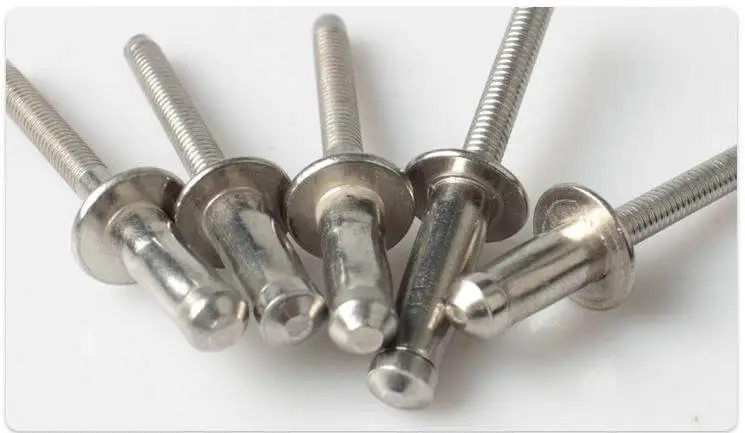
Hemlock Rivets are structural pop rivets, which can also be considered high-strength blind rivets of the Hem-Firm/Hemlok type. Hemlock Rivets are not ordinary open-end pop rivets. Ordinary pop rivets are generally intended for general fastening applications. Hemlock Rivets are better suited for applications requiring high strength, vibration resistance, and superior structural stability.
If you encounter the following issues during assembly, Hemlock Rivets may be a better fit for you:
- Standard rivets lack sufficient strength
- Prone to loosening after vibration
- Unusual noises occur after riveting
- Slight deviations in product hole positions
- Unstable connections in thin or multi-layer panels
- Core rod detachment affects product quality
- Products require higher structural connection strength
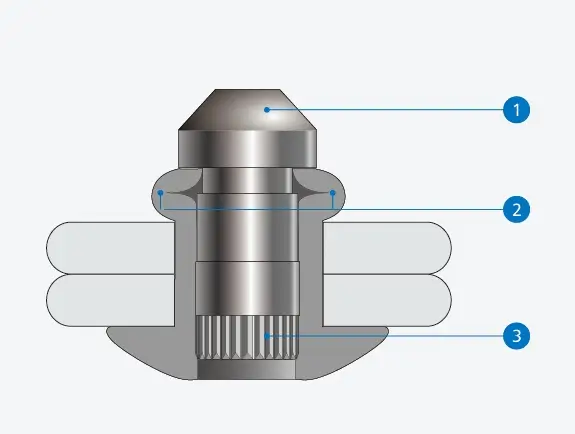
The Core Architecture of Hemlock Rivets
① Body
The body is the primary component that creates the clamping force and the blind-side bulge. During installation, the body forms a large bearing area on the back of the workpiece. Hemlock Rivets help your product distribute clamping forces, preventing thin sheets or low-strength materials from being locally crushed.
②Mandrel
The mandrel of Hemlock Rivets does not simply break off and become ineffective; instead, it forms a mechanical locking mechanism. Hemlock features a retained stem and an interference lock created by a splined stem. This is a key reason why Hemlock Rivets offer superior vibration resistance compared to standard open-end rivets.
③Large Blind Side Bearing Area
Hemlock Rivets create a larger bearing area on the back side of the material. This distributes the tail load and clamping force, reducing the risk of creep, deformation, or tear-through in thin sheets, plastics, brittle materials, or low-strength materials.
Key Structural Features of Hemlock Rivets
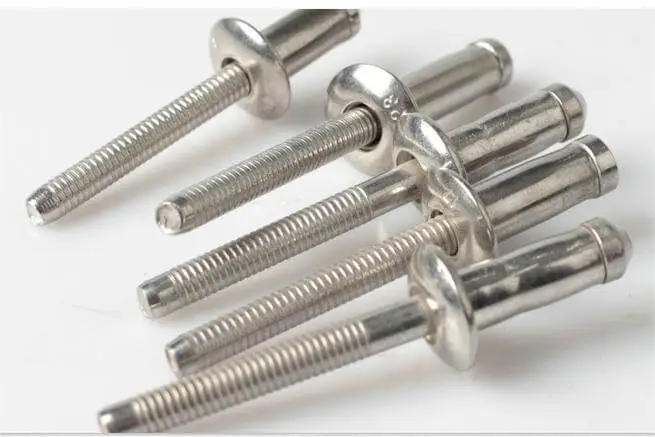
① High shear strength and tensile strength
Hemlock Rivets provide more consistent connection strength than standard hollow rivets, making them ideal for structural applications. In our RIVMATE practical tests, for example, the carbon steel B-type round-head 6.4mm rivet achieved a tensile strength of 7,920 N and a shear strength ranging from 7,700 to 12,500 N.
②Suitable for vibrating environments
Ideal for products that are constantly exposed to vibration, helping to reduce loosening and rattling at connection points.
③Superior hole-filling capability
Hemlock Rivets reliably fill holes, even if their size or shape varies slightly from the intended specifications.
④More stable mandrel retention
With Hemlock Rivets, the mandrel remains securely in place within the rivet head after riveting is complete. This reduces problems caused by mandrel dislodgement.
How Hemlock Rivets Work
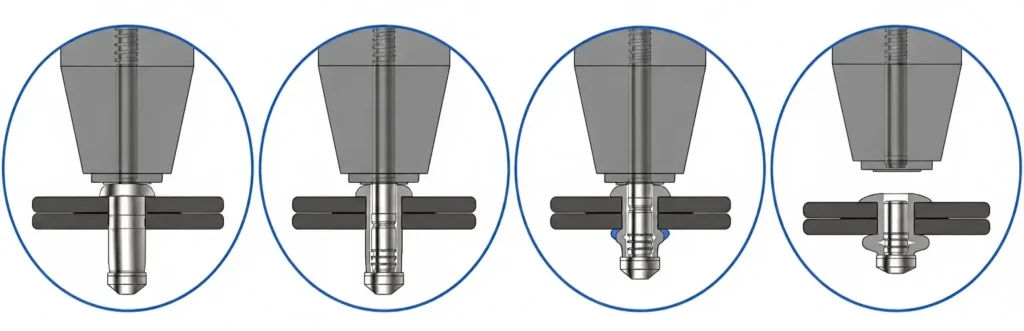
Hemlock Rivets are typically installed using the following process:
- Insert the rivet into the pre-drilled hole
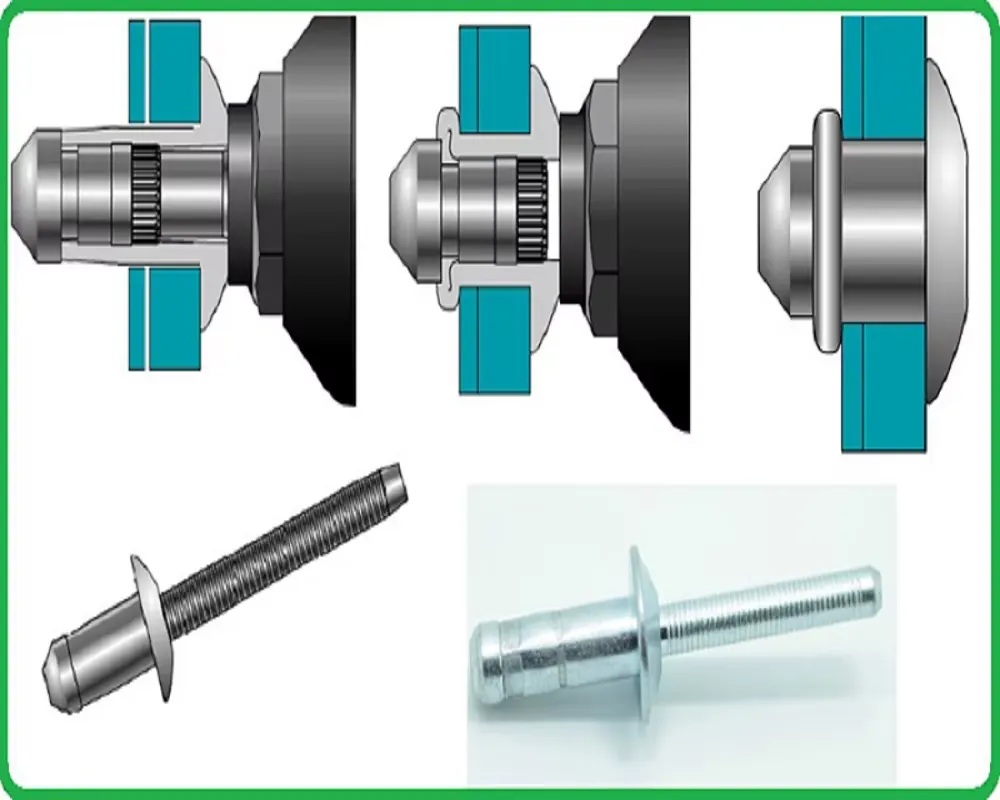
During installation, you only need to work from the front of the workpiece; there is no need to place a nut on the back or perform welding. When inserting the rivet into the pre-drilled hole, ensure that the hole diameter and plate thickness are within the specified range. - The riveting tool pulls the mandrel
The riveting gun pulls the central mandrel, which causes the rivet body to deform, beginning to form a bulge on the blind side. - A large-area support structure forms on the blind side
The tail end of the rivet body gradually deforms and spreads out on the back of the workpiece, forming a large load-bearing surface. - The rivet body expands within the hole to fill the hole walls
The rivet body expands in all directions toward the hole walls, reducing gaps and improving the fit within the hole as well as vibration resistance. - The mandrel breaks and is locked in place
After breaking, the mandrel is secured inside the rivet body, creating a mechanical lock. This reduces the risk of rattling, mandrel loss, and electrical short circuits caused by a loose mandrel.
Hemlock Rivets vs. Open-End Blind Rivets
| Comparison Item | Hemlock Rivets | Open-End Blind Rivets |
|---|---|---|
| Product Positioning | High-strength structural blind rivets designed for stronger fastening, vibration resistance, and more stable joint performance. | General-purpose blind rivets used for light-duty and standard sheet metal fastening applications. |
| Riveting Structure | Forms a stronger locking structure after installation, helping improve clamp force and mandrel retention. | Forms a basic blind-side expansion structure, suitable for common fastening requirements. |
| Strength Performance | Provides higher tensile and shear strength, making it suitable for demanding industrial assemblies. | Provides moderate tensile and shear strength for normal sheet metal, panels, housings, and light structures. |
| Vibration Resistance | Better resistance to vibration and loosening, especially in vehicles, machinery, HVAC equipment, and structural applications. | Suitable for low to medium vibration environments, but not ideal for heavy vibration or high-load joints. |
| Mandrel Retention | Designed to retain the mandrel more securely after riveting, reducing the risk of loose mandrels inside the assembly. | The mandrel breaks after installation, but retention performance is generally lower than structural rivets. |
| Grip Range | Often supports wider grip ranges and more stable fastening across different material thicknesses. | Usually has a narrower grip range and requires more accurate size selection for different thicknesses. |
| Installation Access | Can be installed from one side, making it suitable for closed structures and areas with limited backside access. | Also supports one-side installation, which is one of the main advantages of standard blind rivets. |
| Application Scenarios | Recommended for truck bodies, trailers, HVAC systems, machinery housings, metal structures, solar frames, and equipment assemblies. | Commonly used in sheet metal fabrication, cabinets, light enclosures, signs, household products, and general assembly work. |
| Cost Level | Higher cost, but better suited for projects that require stronger fastening reliability and lower maintenance risk. | Lower cost, suitable for high-volume standard fastening where extreme strength is not required. |
| Best Choice For | Choose Hemlock Rivets when you need stronger joints, better vibration resistance, and more reliable structural fastening. | Choose Open-End Blind Rivets when you need economical, fast, and simple fastening for general applications. |